
Everything important I have achieved came from relationships.
Fr. Mottet had two large rolodex trays that were overflowing with relationships. Each card was more than contact information. It was a connection. He had so many connections that it is impossible to name even the main ones. He often talked about lifelong friends and punctuated the sentence with the words “now deceased.” These are just a few of the fascinating people he talked.
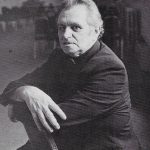
Msgr. Geno Baroni
Fr. Mottet carried Geno Baroni’s words in the little black book in his shirt pocket. Geno’s big thing was leveraging money. He focused on Brooklyn where urban renewal involved bulldozing neighborhoods. Gino, Ed Chambers, and a building contractor raised money to rebuild rundown neighborhoods.
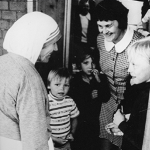
Sr. Concetta Bendicente
Sr. Concetta knew that you’ve got to reach out to people instead of building fences. She got a little house in the neighborhood to serve the elderly and the children. She named it Project Renewal, and it is still there today. Photo is Sr. Concetta with Mother Teresa at Project Renewal.
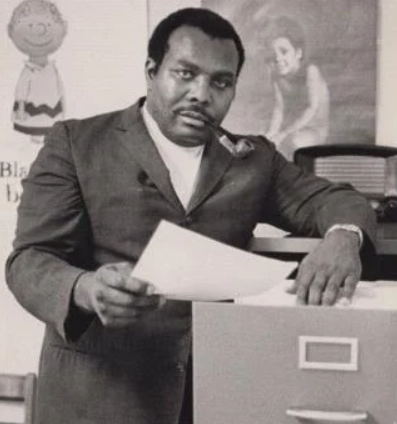
Bill Cribbs
The Catholic Interracial Council and the National Association for the Advancement of Colored People did a lot of planning at Toney’s barbershop. Charles had one chair, and Bill Cribbs had the other. The Cribbs family was a big name in town. Bill was active in the NAACP as well as the Catholic Interracial Council.
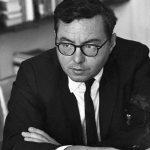
Ed Chambers
Ed Chambers took over when Saul Alinsky died. He made community organizing professional. One of his main points was the distinction between private relationships and public relationships, which enables you to work together on issues where you have agreement.
Tim Collins
When Fr. Mottet became Executive Director of the Campaign for Human Development in 1968, he quickly learned how controversial they were. Fortunately, Tim Collins, his right-hand man, had been there from the beginning and knew what was going on.
Dan Ebener
The U.S. Catholic Bishops started a nationwide collection with a multi-million-dollar fund to help churches in devastated areas. Fr. Mottet worked with Dan Ebener, who headed the Social Action Department then, to get a grant to start Interfaith Housing, which bought inner-city houses, fixed them up, and put families in them.
Msgr. Jack Egan
Msgr. Jack Egan, “Mr. Social Justice,” was one of Fr. Mottet’s heroes while he was in Chicago. He called Jack “an Irish street fighter.” When Egan left Chicago, he went to Notre Dame where he raised a lot of money and called his social action friends together to start the Catholic Committee on Urban Ministry (CCUM), which Fr. Mottet called “seecum.”
Greg Galluzzo
Fr. Mottet hit it off right away with Greg Galluzzo, Executive Director of Gamaliel Foundation, who often visited Fr. Mottet and stay overnight at the rectory. Greg mentored Barack Obama in Chicago.
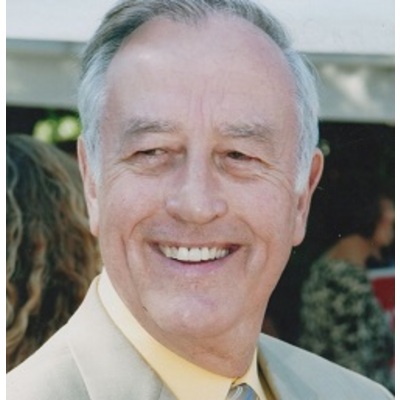
Bill Gluba
Before Fr. Mottet went to Washington, D.C., he set up an organization to sell homes to minorities. Bill Gluba, who was in real estate then, said, “It takes me ten times as much work to sell a house to a poor person or an African American as to someone else.” Bill served four terms as Mayor of Davenport.
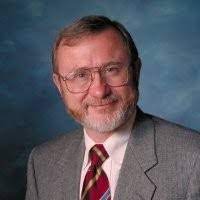
Steve Goebel
Steve came as a conscientious objector and lived at St. Joe’s, which was old-style and rundown. Steve was from a big family where he shared a room with two of his brothers. The rectory seemed spacious and comfortable to him. Fr. Mottet still laughed about the day Steve said to him, “You look like you’re living in considerable comfort here.”
John Howard Griffin
Fr. Mottet and John Howard Griffin, the author of Black Like Me, became good friends. Griffin opened doors for him and provided inside information. He was the one who broke the news to Fr. Mottet about Sr. Catherine’s miracle. The FBI called him when there was trouble in a city because they knew he had the trust of both Blacks and Whites.
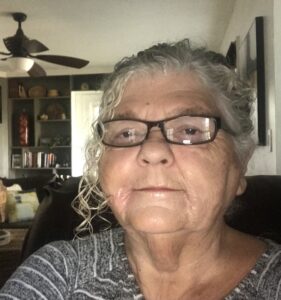
Loxi Hopkins
Fr. Mottet considered Loxi Hopkins to be the best organizer and leader he ever recruited into Quad Cities Interfaith. When we ran out of money to pay an organizer, Loxi took over for a year, but she said, “I never want to do it again.” Loxi had the privilege to be with Fr. Mottet when he died.
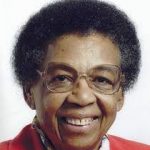
Bernice Jones
Bernice Jones, a friend of the Toneys, rose from janitress to the position of Affirmative Action Officer at the Rock Island Arsenal. It was fun to be around her because she was a character. She was strong on civil rights but didn’t turn people off because she did it with a smile on her face.
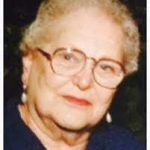
Ida Kramer
Ida Kramer, another Jewish woman, was always around at meetings and events. Jewish people understood social justice because they had experienced so much injustice.
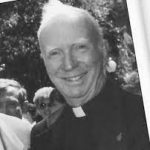
Fr. Dick McSorley
Fr. Mottet and Fr. McSorley started a Catholic Worker house in an all-Black neighborhood. First, they cleaned the house out and put everything out by the street for the city to pick up. As his way to be accepted in the neighborhood, Fr. Mottet started a garden beside the house, and everybody stopped to talk to him. He was really doing one-on-one interviews to get to know the people.
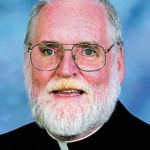
Fr. Ed O’Melia
Fr. Mottet knew if was time for the younger generation to lead the healing Masses. Fr. Ed O’Melia was younger and had the advantage of being bilingual, so he handled the healing Masses. He was able to combine contemplation and social action. He was the homilist for Fr. Mottet’s funeral.
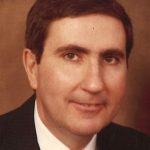
Jim Orr
Jim Orr was one of Fr. Mottet’s students at Assumption High School. Jim had an epiphany experience when he delivered groceries to a poor family. He realized that there may be tremendous poverty, illness, or despair behind any door. At the end of his life, Fr. Mottet worked with Jim on an economic development project that he considered “the greatest miracle of my life.

Frank Rhomberg
Fr. Mottet, Betty Anderson, and Frank Rhomberg, were “like a wheel with three spokes.” They had planning meetings at Betty’s LeClaire home. Fr. Mottet said, “Frank, I’ll dream up the dreams, and you figure out how we can do them.”

Ernie Rodriguez
Ernie Rodriguez grew up in a boxcar in Holy City in Bettendorf. He lived in tremendous poverty, but he had that same feeling that Fr. Mottet did–we can change things if we work together and get organized. Later, Ernie worked for Fr. Mottet at the Social Action Department to form the Area Board of Migrants.
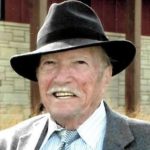
Jack Schneiders
Jack Schneiders worked to get Davenport’s housing codes enforced and get redlines taken down. He was involved in both the Catholic Interracial Council and the National Association for the Advancement of Colored People. With Jack’s help, the two organizations worked together very effectively.
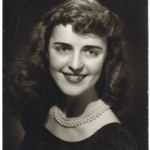
Jeanne Sheehan
Jeanne was the beautiful girl Fr. Mottet loved and wanted to marry. She said he broke her heart when he became a priest, but she knew he did the right thing. When the authors interviewed her in Kansas City, where she lived happily near her grandchildren, she told Fr. Mottet that she forgave him about the valentine.
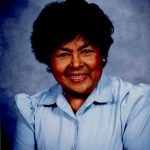
Ann Toney
All the new immigrants from Mississippi went to Ann’s side of Toney’s Barber Shop. She heard all the news from the South and told them how to operate in the North. She kept Charles informed of significant information she learned.
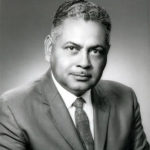
Charles Toney
Fr. Mottet had great respect and affection for Charles Toney, the acknowledged leader of the Davenport Civil Rights Movement. Charles wanted to build a strip mall in Davenport, but banks wouldn’t loan him money. He said, “I can borrow money from the bank to buy a Cadillac, but I can’t borrow money to start a business.”
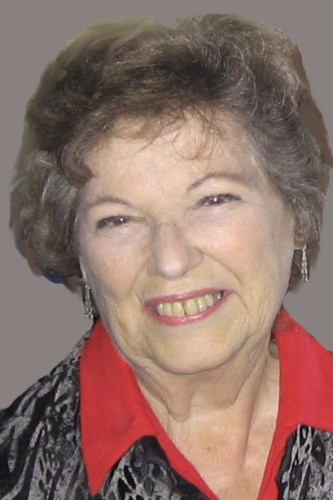
Betty Anderson Torry
Fr. Mottet always hired the best people he could find. He looked for “a doer, not a talker.” Betty Anderson had a business background, and she was “a whiz.” Fr. Mottet never found anybody who could match her. Betty enjoyed telling stories about the first Social Action office on Brady Street.